Episode 499 - Alaska gubernatorial candidate: JKT
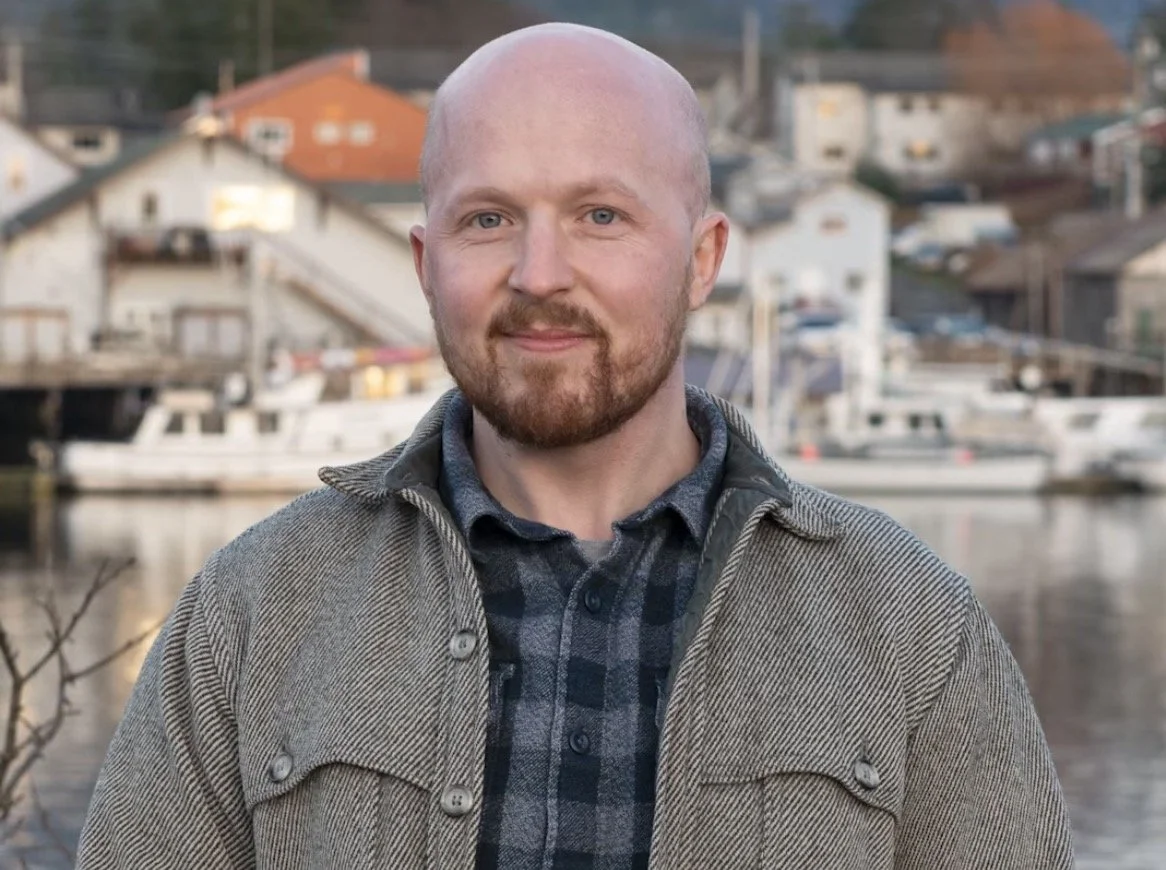
In this episode, Jonathan Kreiss-Tomkins discusses his Sitka roots, early interest in politics, and decision to run for governor of Alaska. JKT outlines policy priorities including protecting the Permanent Fund, closing oil tax loopholes, supporting fishing communities and fair representation on the Board of Fish, and expanding affordable housing.
On Step Alaska — Interview with Jonathan Kriess-Tompkins
On Step Alaska: Jonathan, thanks for being on the podcast. Nice to meet you.
Kriess-Tompkins: Yeah, thanks for having me, Jeff.
On Step Alaska: So, grew up in Sitka. You graduated from Sitka High School in 2007. You got right into public policy. What was it that got you interested in state politics?
Kriess-Tompkins: I first got interested when I was an eighth grader at Blatchley Middle School. So it dials back the clock to when it all sort of got going, and I can't quite explain it, but I was young and I guess kind of curious, and the internet was starting to unlock a lot of access to information at that time. You know, 2002 — early days of the internet. And I just discovered electoral politics, became very, very interested and learned everything I possibly could. And so I had gotten involved in some campaigns and volunteered through my time in Sitka and stayed involved when I was out in college, and ultimately got a couple of recruitment calls when I was a senior in college about running for the legislature. And that's kind of what catalyzed this whole thing.
On Step Alaska: Yeah, it's kind of the sweet spot because the internet was a great tool and it was before social media, so it was like social media kind of eroded all the gains that we may have made by being able to be informed and educate yourself.
Kriess-Tompkins: Yeah, there was a lot of sort of tech utopian talk and thought in that time in the early and mid-2000s, because it's like it opens up the world to you. And it certainly opened up the world to me — learning about all sorts of things and developing this interest, which has totally changed my life. But yeah, obviously some negative dynamics have also presented themselves through the same technology.
On Step Alaska: You were involved in coordinating a TEDx in Sitka — did I find that correctly?
Kriess-Tompkins: Oh wow, yeah — deep cut. Hopefully it's not a bad memory. No, not a bad memory, it was a great event. I haven't thought about that in a long time. Yeah, I helped coordinate TEDx Sitka. Gosh, I can't even remember what year that would have been. Was I in college still? Or maybe I was out of college. I can't remember. But yeah, I've always been a curious person, interested in learning. It was sort of a format to bring together different speakers and presenters on all sorts of subjects. I was just excited about the idea. So I pulled together some people, we pulled together some money, we made it happen. It was just a great one-off project way back when.
On Step Alaska: 2012.
Kriess-Tompkins: Wow, that's crazy because that's the year I ran for the legislature. I guess I forgot about that. So I was doing TEDx Sitka while I was campaigning, which in hindsight is insane. But I think I had gotten TEDx Sitka going before I even thought about running for the legislature. So I was already committed to that project. And then the whole legislative thing kind of fell out of the sky.
On Step Alaska: That's funny. When I look back on my teaching career, I would think there's no way I could forget kids' names or when certain events happened. But I look back and after a while, it's like, yeah, that was a decade ago. So, you're running for governor now. And I got some questions for you regarding that. Because you've been in Sitka, you grew up in Sitka. Southeast Alaska has shifted from timber to tourism. Sitka lost its mill. Ketchikan lost its mill. You've seen the transition from timber to tourism. Sitka has been pretty cautious and purposeful in its relationship with tourism. So as governor, what could you do to help support local economies without overwhelming the infrastructure or eroding the local experience?
Kriess-Tompkins: I think local voice is really important. And people who live in tourism communities should have a seat at the table at all times. I mean, overall, I feel like Southeast Alaska has navigated tourism reasonably well. Sitka certainly made some choices, but I think has ultimately found a compromise that by and large is working. I mean, there have been some growing pains in recent years. But I think it's a positive industry for Southeast Alaska and for Alaska. The pulp mill closed when I was five years old, and I think it was kind of like a sky-is-falling moment for Sitka way back then. But tourism has in a big way filled the void. And I think there's a good argument that there's more prosperity in Sitka because of the tourism industry than there might have been in some alternate reality. Not to say there aren't problems — cost of living, housing, all sorts of things. But I just think it's really important that local residents have a seat at the table in terms of how the industry shows up in a community. There's a lot of outside interests, a lot of outside businesses. Everybody kind of wants to get their hand on it because it's a pretty good growing sector. And so it can be really tempting to just try to get as many tourists as possible, and then the local experience gets put on the back burner. So there's a good balance that needs to be struck.
On Step Alaska: Yeah, absolutely. I think that's well summarized. So when you look back at the 70s and 80s with the oil going, there were 2 million barrels a day — now the pipeline is at about 500,000 barrels a day. But increasing production is not a matter of turning on the knob. So as far as state finances, what's a realistic financial path forward? At the state level, it's mostly oil production and the Permanent Fund interest. What can we do going forward? As governor, what are you going to try to accomplish to get us on financially responsible ground?
Kriess-Tompkins: I think it's really important we close some tax loopholes that currently exist on the books right now. One of the things that really jumps out to me is that right now, one of our two major oil and gas producers — Hilcorp — doesn't contribute to Alaska through corporate income tax the way every other large corporation in Alaska, including notably ConocoPhillips, contributes to the state. And so I think it's just a matter of basic fairness. If you have two coffee shops on Main Street and one is paying sales tax and the other isn't, even though they're doing the exact same thing, it just doesn't make a lot of sense to me. And it's not just an academic objection — the amount of money you're talking about is between $100 and $200 million a year, which is multiples of what the ferry system budget costs every year. So it's real money.
I think there are some other aspects of our oil tax system that we should look at to make sure the state is getting its fair share. The North Slope is a resource that the state of Alaska owns. We are the owners and we should be looking out for a maximum return. In fact, the Constitution tells us that is our fiduciary obligation. On the Permanent Fund, I have really supported managing it for the long term and making sure the principal is protected and the fund can continue to grow. Because in the long term, the Permanent Fund is going to be a huge piece of balancing the budget. The fact that it's $85-86 billion right now is because we have conservatively managed the fund and let it grow. I think it's incredibly important we continue to do that, and that will set up the state in the medium and long-term future in a really good way.
On Step Alaska: There's a huge windup for this question. Along that same thread, the Permanent Fund was created in 1976. The first deposit went in in 1977. Alaska got rid of its income tax in 1980. Governor Jay Hammond didn't like the idea, but didn't veto it — I was looking at an old transcript where he said he regretted that later. The dividend check started in 1982. Alaskans really liked the Permanent Fund Dividend checks, and there's no sales tax, no income tax. The financial strains have really hurt infrastructure and education pretty much everywhere. I'm a teacher, so obviously I see the education part very closely, but families in all sectors face a lot of uncertainty. Some legislators say we've been right-sizing with a lot of the cuts that have been made over the last decade. But with inflation, many Alaskans also think we have gone past right-sizing and are cutting really deeply. So taxes are obviously not popular, and the Permanent Fund is really popular. How do you navigate that? And how can you get bipartisan give and take? Is bipartisan cooperation possible on these state financial issues?
Kriess-Tompkins: Yeah, I think these big questions all have this sort of tension — revenues, budget cuts, Permanent Fund dividend. It's not just a simple two-dimensional question. There are multiple dimensions to the state budget, which in many ways makes Alaska's budget a more complicated beast to tackle than other state budgets. Basically, you have to broker a multi-way compromise in order to sustainably and durably balance the Alaska budget. But in my last term in office in 2021 and 2022, the governor and legislative leadership were in an impasse. We were on the precipice of a government shutdown. And there was a bipartisan group of legislators from the House and Senate who were tasked with figuring out a grand compromise of sorts. I was the co-chair of that task force on the House side. We worked really hard. It was a very ideologically diverse group with very different perspectives on what right-size government looks like, what kinds of taxes do or don't make sense, how big or small the Permanent Fund dividend should be. But ultimately, the eight of us — from Mike Shower and Shelley Hughes on the right to Jesse Kiehl in Juneau on the left, about as big an ideological spectrum as you'll find among legislators — agreed on a consensus set of recommendations that would have balanced the budget. I'm not saying that exact set of recommendations is the be-all, end-all skeleton key to the state budget. But I do think through reasoned conversation and a deliberate process where all parties feel like they can trust the process, we actually can answer these big questions and get to compromise and consensus.
On Step Alaska: You were a representative from 2013 to 2022. How long did it take you to kind of find your place at the table? Is there a table? Are there different tables? How were you accepted and how did you get involved in some of these bigger conversations?
Kriess-Tompkins: I think it takes a term or two in the legislature — two to four years — to really get up to speed, generally speaking. Sometimes people enter the legislature having worked there as a staffer before, so the learning curve is a bit more accelerated for those folks. But yeah, I was starting from scratch. Honestly, I'm not sure I'd even set foot inside the Capitol before I was elected, even though I grew up in Sitka and it's right there. So I was in sponge mode for the first couple of years, really just trying to listen and learn and develop trust-based relationships. I didn't want to come in throwing bombs and grenades and making bombastic declarations — that just wasn't my style. After that first term or two, then you start to really make moves and try to get things done. I did actually pass some legislation in my freshman term, but my mindset was mostly listen and learn. And then over the last six years, I was maybe a bit more purposeful in trying to accomplish some objectives in the legislature.
On Step Alaska: Do you still have good relationships with some of the current serving members? And do you think it would be pretty easy to re-engage in those negotiations?
Kriess-Tompkins: I do. Yeah, I keep up with a lot of the current legislators, including folks who've gotten elected after I left in 2022. And I mean, I think that's incredibly important. The current administration, I think, has fallen short for Alaska in so many ways. Arguably the biggest way is just the almost non-existent relationship between the governor and the legislature. Non-existent is maybe even a gentle way of phrasing it — it's a negative relationship. There's active distrust. And so when you have two branches of government that can't work together to solve problems, bad stuff happens. And lo and behold, a lot of bad stuff has happened in Alaska over the last five to eight years.
On Step Alaska: The arguments about preservation, conservation, and use have been going on for decades. Do you think the modern iteration of that — because of social media and the internet — has made things more difficult, more volatile? Are people more performative for social media? Has that lower-48 political divisiveness come up here and impacted the legislature, or do you think Alaska has been able to keep that at bay a little bit?
Kriess-Tompkins: I would give two answers. In a relative sense, I think Alaska is probably doing better than most of the rest of the country. There's still an Alaska factor that comes into play in the legislature and our political process. It's sort of like there's a set of Alaska issues — people will approach politics here as Alaskans rather than as members of a political party or some other affiliation. And that's good. But the second answer is, looking at how Alaska politics has changed over time, there has totally been this sort of backsliding or devolution towards a more cats-and-dogs kind of politics. As you put it, the internet and social media in particular has made the world smaller, which in many ways is incredible. But it's also kind of blurred a lot of the lines that make different communities unique and created a more cookie-cutter, uniform kind of politics — nationalized politics, in other words. I think broadly speaking, that's kind of a negative thing. And we have totally felt that and experienced that, even if we're still better off than most other parts of the country.
On Step Alaska: Yeah, it's a tough thing. Obviously when it comes to taxes and trying to create more revenue, that's been a discussion that's happened for a long time. But now with being so completely dependent on oil — what is it, about 95% of our revenue is either from production itself or from earnings on the Permanent Fund — tourism, while incredibly important for local communities, doesn't provide much at all for the state to fund education or infrastructure. We built so much in the 80s and 90s and now we have buildings in rough shape. But if you start mentioning taking away part of the Permanent Fund, that gets around on social media fast. Or an income tax or a sales tax — Anchorage doesn't have a sales tax, but Ketchikan already has 6.5%. It's got to be a tough thing when you're trying to take all these variables and come up with a solution, but anything you say can be used against you. So how do you campaign and be honest without making a misstep?
Kriess-Tompkins: I mean, there's a part of your mind that's always just kind of aware of how stuff can get distorted, clipped and chopped up and put on repeat on the internet. I think the biggest defense against that is you just develop your own reputation and people sort of trust you and know that you take a thoughtful, reasonable approach — which is something you have to build over time, over many years. And if you're successful in doing that, I think that provides some Teflon and some defense against getting attacked in 140 characters or whatever the flavor of social media attack happens to be. I think ultimately your word, your reputation — in Alaska it's small enough that people know their elected officials. That was always the way I approached it in my time in the legislature.
On Step Alaska: What's something that you wish people would know about that financial situation that would really help conversations going forward?
Kriess-Tompkins: Ooh. I mean, this is my soapbox issue — although maybe sandbox works too. The Permanent Fund. And I don't think Alaskans realize that the Permanent Fund is not really permanent, as the name would suggest. What I mean by that is because of this sort of seemingly obscure account structure, when the Permanent Fund was originally set up, a pretty major chunk of the fund — anywhere between 10 and 25% — and 10 or 25% of $86 billion is a lot of money — is vulnerable to appropriation at any moment in time from a simple majority of the legislature. So I think when Alaskans think about the Permanent Fund, they think, oh, it's all locked up, it's a nest egg, it's an endowment. You couldn't spend it down for whatever flavor-of-the-day project or idea might be popular. But it's not as invulnerable as I think a lot of people believe. Because there's such a major chunk of money in the fund that could be spent by the legislature — again, simple majority, at any time — there's just a lot of risk there. And as the state's finances have gotten more fraught and it's been harder to make ends meet year to year, I think there's greater and greater vulnerability that those tens of billions of dollars will get spent by the legislature. Because it's easier to grab that money out of the Permanent Fund than it is to cut education, which people definitely don't like right now in Alaska, or raise taxes, which people also don't like. If you could just go into the Permanent Fund and grab a couple hundred million dollars to bail you out of an imbalanced budget, that's a tempting option. I'm very, very worried — it hasn't happened yet, mind you — but the legislature, including while I was there, came very, very close to doing that multiple times. And I think it's just a matter of time before that does happen. And once it happens the first time, it just gets so much easier, and then next thing you know you've spent down the fund. That is the absolute worst long-term thing that could happen to Alaska.
On Step Alaska: Yeah. That's a pretty basic financial principle — if you don't have as much money in the bank, you won't earn as much interest. If you're going to retire, you can't be spending down your retirement. I think another big fear would be if you go down the tax road, where does the income tax stop? Once there is one, even if it's very small to start, can we trust people down the road to not increase it? And people are very wary of how taxes are spent — they look at the federal government and the amount of waste and corruption that people cite there and assume it's the same at every level in every state. But that might not be true. It doesn't seem like there are extra billions of dollars being wasted somewhere in Alaska. Things seem pretty lean as it is.
Kriess-Tompkins: Yeah, I agree entirely.
On Step Alaska: Moving to another hot topic issue, especially here in Southeast Alaska — fishing is a critical part of local economies and people are worried about populations. People often point to trawlers for at least a share of the responsibility. Where do you stand on helping ensure salmon populations? It's obviously a very complex issue with a lot of variables, but what would you do to support the fishing industry?
Kriess-Tompkins: Supporting fishing was a through line of my 10 years in the legislature. I'm pretty hardcore when it comes to supporting fishing communities. There were more limited entry fishing permits in my district than any district in Alaska. And the island communities I represented were totally dependent on fishing. I spent a couple summers deckhanding on trollers out of Sitka — trollers, not trawlers. I just want to differentiate since it's a subtle vowel difference, and because the power troll fleet is only in Southeast Alaska, the rest of the state is less familiar with that gear group.
So, very familiar with the industry and how important it is to Alaska. I served on the fisheries committee for all 10 years I was in the legislature. I was very active on Board of Fish nominations and confirmation votes and really advocated hard for what I felt was balanced representation on the Board of Fish. I feel like we've lost balance on the Board of Fish. It's now really dominated by — to put it bluntly — the Kenai River Sportfishing Association. They should absolutely have a voice in the process, but I don't think the process should be dominated by any one interest group or sector. And southeast Alaska doesn't have a seat on the Board of Fish — that's screwed up. Going back through statehood, I'm not sure there has been another time in history where Southeast Alaska has not had a seat on the Board of Fish, for a region with as much population and as much dependence on fisheries as ours. That needs to be changed.
When you talk about balance on the Board of Fish, it means all user groups should have a say — thoughtful, independent-minded people making tough decisions, with diversity in terms of geography. There's a lot of local knowledge in each of these regions about how fisheries work. If you have regions like Southeast that are shut out because they don't have a member, I think that's pretty wrong and it needs to be fixed.
I also really worry about the out-migration of fishing permits out of Alaska and going to Seattle, going to the lower 48. That was something I was really active on in the legislature. Every permit that leaves Alaska is a small business leaving the state. It's GDP leaving the state. It's employment and deckhand jobs that leave the state. The economic multiplier effects are powerful. It should be a state priority to get as many Alaska fishing permits in the hands of and fished by Alaskans, full stop. Having a more aggressive approach to getting permits — and also federal quota for black cod and halibut — in the hands of Alaskans is just a no-brainer economic development priority.
And then on federal fisheries and bycatch and the trawl fleet — I organized a sign-on letter to support more conservative Chinook salmon bycatch caps in the Bering Sea two months after I was sworn in in February 2013, and was active through all my 10 years in the legislature on bycatch and fisheries issues. The crash in salmon runs is complex and there are a lot of factors at play. I've always supported taking a more conservation-oriented approach toward bycatch and reducing habitat impacts. And also, I don't think we can say it's all because of one thing when we look at the crashed salmon stocks in the Yukon and the Kuskokwim. Both are true. I support and have worked very hard to reduce bycatch and the impacts of trawling. And when thinking about these stocks that have crashed, we also have to look at all possible factors. So it's an and-both kind of equation. Reducing bycatch and habitat impact from bottom trawling is incredibly important, and I've been very active on that all 10 years I was in the legislature and actually since as well.
On Step Alaska: You mentioned this earlier, but housing and cost of living is something that is very important to Alaska. It's very expensive to live here, especially in some of these rural communities where you can't drive somewhere else and there's no road connection. That's also not something the legislature or governor can just magically change. So what ideas do you have to help with cost of living and home availability?
Kriess-Tompkins: We need to get more homes built, period. Build baby build — I guess that's the slogan. From a policy perspective, that's the high-level goal. More homes. Now, there's a lot of things the state can do.
One, the state should make state land available, especially if it's right in communities — communities like Ketchikan, communities like Sitka. The state is a large landowner. It varies region by region, city by city. But there are large parcels and tracts of state land that are very developable and in the heart or very proximate to population centers in Alaska. I think the state should look at making that land available for housing development to add more supply to the market.
Number two, the state has very powerful financing instruments in Alaska Housing Finance Corporation and also AIDEA, the Alaska Industrial Development and Export Authority. I think the full force and power of the state should be focused on tackling the housing problem — getting more housing built and using the financing strength of those state corporations to be part of the solution. That is a super high priority and a real no-brainer.
Lastly, there are regulatory barriers to building lower-cost and affordable housing. Modular housing, trailers — a lot of that has for a long time been a source of low-cost housing. There's a certain social stigma around trailers, but if you look at the housing market, they're an incredibly important source of affordable housing. For people who need a roof over their heads, that is a super obvious choice. But as a country, and to some extent as a state, we have made it very hard for modular and manufactured housing to get built and put into communities. If you look around any community in Alaska, I challenge you to find new trailers or new manufactured housing that has been put into service in the last 20 years. We're just slowly winnowing down this really important part of the housing equation. As trailers, manufactured housing, or tiny homes are made so difficult to build, we're reducing the supply of lower-income affordable housing. It shouldn't be a shock when that forces some people onto the streets.
So I think the state should make manufactured housing legal again, as it were — I know that's a little glib, but there are just so many regulatory barriers. I own two tiny houses myself in Sitka and I can attest what a nightmare they are to get legally permitted. It is insane how difficult it is to create a legal structure that is small. It's all well-intentioned regulation, but it totally backfires.
On Step Alaska: When my parents moved up in 1986, we lived in teacher housing and the teacher housing in Klawock were trailers. And the whole idea was that this is where you started. After a couple of years, you'd have enough money to move up. Like you get your condo first, you're young, you have your career, you start off with a condo, then you leverage that, make a little equity, and trade up to a larger home. But without that intermediate or beginner home, you have a career and then you're staring at really expensive rent with no equity being built. The starter house is $450,000 or $270,000 but needs $200,000 of maintenance on top of that. It's just unaffordable for so many people.
Kriess-Tompkins: Yeah. It's a huge problem. Every community in Alaska is facing it right now. It's got to get solved. I think that stigma — I didn't really consider it before — became much more prevalent in the last 20 or so years. People didn't want to be seen as living in a trailer. But if you have good trailers, good modular homes, condos available — there's absolute dignity in that, and you can use it as a stepping stone. I think that'd be a great thing going forward. But again, it takes a lot of pieces to get there.
Kriess-Tompkins: Totally. I couldn't agree more.
On Step Alaska: So Tony Knowles was the last Democrat governor of Alaska. His term ended in 2002. Does that represent a challenge, or is that just simply a fact?
Kriess-Tompkins: Well, I mean, I think Governor Knowles was an amazing governor. That's a great eight-year legacy that still lives on in Alaska in all sorts of ways. Governor Walker was an independent, elected in 2014. He beat a Republican incumbent. So from the perspective of can people besides Republicans get elected — I think the answer is yes. And Governor Walker is proof positive of that. Congresswoman Peltola got elected two different times statewide as a Democrat. Alaska is just a more competitive state statewide than it was 10 or 20 years ago. It's an open seat — there's no incumbent. If anything, it's kind of an anti-incumbent-party situation because Governor Dunleavy, per the polling data, is among the most unpopular governors in the nation right now. So I think there's a bit of a cloud because people are not very happy with how things have gone under his tenure. I think it's a changed election and there's a lot of opportunity, and we're excited to realize it.
On Step Alaska: Where's Alaska in 10 years?
Kriess-Tompkins: I think Alaska in 10 years is a politically mixed state where all elections are going to be pretty competitive. And I'm really hoping on a state level that we've solved some of these big questions — gotten education back on track, reinvested in our schools, rebuilt the university so it can be an engine for young people and talent and entrepreneurship and innovation. That we have a diversified economy. And I think there are a lot of ways that can look: year-round tourism including winter tourism, international tourism, growing the logistics sector in Anchorage and Fairbanks with all the international cargo, value-added fisheries, getting the maximum value out of our $5 to $6 billion fishery sector, and continuing to responsibly develop the mineral and oil and gas resources we currently have. So doing what we're already doing well and getting the maximum value out of it, and then continuing to push in new directions that set the state up in a sustainable way long-term. That's the Alaska I would like to see in 10 years.
On Step Alaska: What excites you most about the potential to be governor?
Kriess-Tompkins: To solve problems. I'm so excited to solve things that I think have really clear, tractable solutions and just require that kind of problem-solving energy. It's like all these problems are nails and I'm totally a hammer mentality. I want to get education forward-funded. I want schools to get reinvested. I want the Permanent Fund to be permanent and constitutionally protected from overspending. I want to see the veto override threshold lowered to two-thirds so that there's balance between the executive and legislature. And on and on, big and small — I want to see more public use cabins built so you don't have to stay up till midnight six months before the reservation window opens to get one. Things big and small in our communities, there are just so many things that we can get done that I think there is political consensus and alignment to accomplish with the legislature. It just requires some problem-solving energy. And I just love getting things done. I think being governor is the ultimate position to try to solve problems and get things done.
On Step Alaska: So you think there's a viable way forward so that we can address the education and infrastructure issues and we're not in dire straits? You see some hope?
Kriess-Tompkins: Absolutely. Absolutely.
On Step Alaska: What else would you want to add? What have I missed? What do you want to pitch?
Kriess-Tompkins: No, great questions. I'm really happy with how the campaign is going. We're sort of running on rocket fuel. We've been in the race now for two and a half months — we're one of the last candidates to get in — but we've raised $1.3 million. We've raised more from donors than any other candidate by a long measure. We have more donors — I'm quite confident — than any other campaign, 2,000-plus donors. And I'm just excited about the vibe that we're putting out, this kind of high-energy, be-everywhere-all-the-time approach. We're having fun while we're doing it, but we're super focused on winning in August and November. Yeah, excited for the opportunity to share a little more on the podcast.
On Step Alaska: Well, thanks a lot for being on here. Really appreciate your time.
Kriess-Tompkins: Yeah, thanks so much, Jeff.
Thanks for listening. Please share. If you found today's conversation useful, you can go deeper with my writing on Substack — that's where I expand on these ideas from the show.