Episode 500 - Alaska gubernatorial candidate: Click Bishop
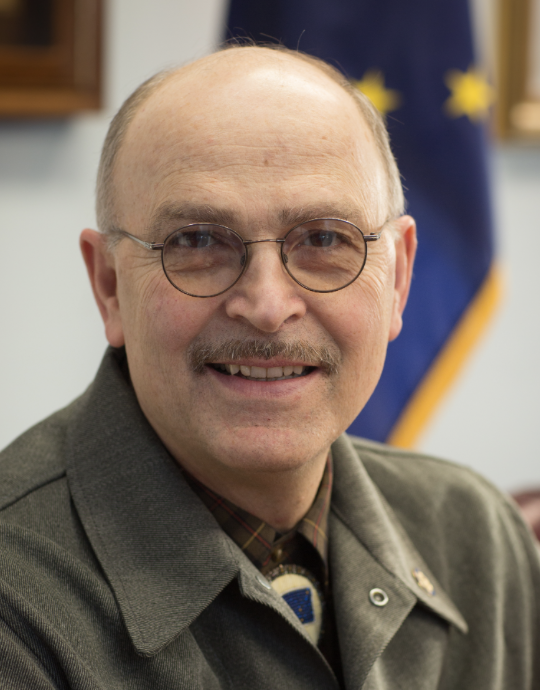
Click Bishop discusses his journey from gold mining and pipeline work to public service as a member of the Alaska State Senate. He breaks down Alaska's energy and resource challenges, including oil and gas production, pipeline economics, and energy security, We also discuss education funding, vocational training, fisheries management, and rural needs. Bishop emphasizes bipartisan cooperation, practical solutions for infrastructure and cost-of-living pressures, and the importance of trades and local industries in keeping Alaska resilient as the state navigates future development and resource opportunities.
On Step Alaska — Interview with Click Bishop
On Step Alaska: Click Bishop, thanks for taking some time out of your day and being on here.
Bishop: Greatly appreciated. Thank you for having us on, Jeff.
On Step Alaska: So you've been in Alaska since statehood. You're a third generation gold miner. You helped build the pipeline. Those are some serious Alaska check marks. Why did you get into politics?
Bishop: I didn't. It got into me. I ran my union's apprenticeship program for 20 years, the operating engineers and had the best job in Alaska, I thought, and without a doubt. And then a woman by the name of Sarah Palin got elected governor and called and left a message on our answering machine for me to call her. So I did. And long story short, I, with some soul searching and some prayer, I got, took her up on her offer. She said, you need to do your public service. And so went to Juneau in 06 in December. Anyway, got on the payroll 07 January. And the rest is history. Worked for her and Governor Parnell. And so almost six years in the Department of Labor. And as commissioner, put together the pipeline training plan, the gas line training plan, and it's subsequently been updated through the Walker administration. But, you know, I had worked for two other governors, pro bono, Tony Knowles and Governor Murkowski, on both of their gas line plans, if you will. And why is that? That's because, you know, I know the labor side of the street. So, yeah, there you go. That's how I got into politics. And then I retired as commissioner and I was asked by some senators to run for the Senate, you know, redistricting 2010 decennial census. And they come out with a new set of maps in 12 and ran for the Senate. And so 12 years in the Senate and some people had been after me over the years to take a shot at running for governor. And hardest decision I ever made because my Senate district is a lot of family and a lot of friends and I loved it. And hopefully I've got an opportunity to serve them again and the rest of Alaskans.
On Step Alaska: You represented a large swath of interior Alaska, Canada, almost to Norton Sound. How did that experience help prepare you to address the myriad issues of both city and rural life?
Bishop: Well, I've got a, I think I've got a, without a doubt, I've got a good, deep understanding of rural Alaska. My wife's people, you know, they come from over on the Yukon and, you know, as a working person, well, let me go back to, you know, how did I go to school and catch a can? My dad was a superintendent for Green Construction Company, and we worked all over Alaska. They had a southeast division that was headquartered in Juneau. And so there was a lot of work in southeast in the 60s. So I got to see the panhandle, if you will, as a child. And then the Alaska Highway and rural Alaska, did rural airports down on the lower Yukon and worked all over the state, you know, following my dad. And then I did the same thing in a lot of the same communities 20 years later as an adult. So that's, I'm very well versed urban versus rural. And you're right, my Senate district, my old Senate district that I was fortunate to represent, if it was a state, it was the third largest state in the union.
On Step Alaska: And you are correct. So you've been in, you've seen a lot of Alaska. I kind of, I guess, romanticize — a lot of us romanticize — that Alaska, we've always had these arguments about what to do with resources and how much we should extract. But it seems like now the proliferation of the internet and social media has kind of changed the dynamics. You mentioned that you worked for Palin and you worked for the last Democratic governor, Tony Knowles. Were things a little bit more cordial between the Republicans and Democrats back then? Is it more divisive now or what's the general feeling like?
Bishop: Oh, so I just want to be clear. I worked for Tony Knowles pro bono for his administration because his gas line was my way or the highway. That was their theme in 99. And so that was pro bono work. But I did help his administration form what was now the Alaska Workforce Investment Board. Then it was called the Alaska Human Resource Investment Council, then spun off the AWIB board. But to answer your question, the social media — in my opinion, you know, I grew up watching Neil Armstrong take the first step on the moon in Tongass apartments on the 11th floor on a black and white TV. And, you know, I'm a student of history. My mother always said I was born a hundred years too late. I'd been better served coming over the Chilkoot Pass in 1898 with the rest of the Stampeders. I really believe that. I grew up with Walter Cronkite, Huntley, Brinkley, that genre of news. A quote I like to use is a Lyndon Johnson quote, and you'll remember he didn't run for re-election. And it was because of a Walter Cronkite broadcast one night, and he famously said, when I've lost Walter Cronkite, I've lost the electorate. So, consequently, he didn't run for a second term, and Richard Nixon was president. So I believe it has definitely changed. You know, we were doing polling in the Senate majority over the years, and we put these survey questions together. And our IT resident expert, if you will, said, Click, people got the attention span of nine seconds. You know, a goldfish has got more attention span than a human does now. And then I heard another term — Shannon and I were putting together a film and a guy used a term called doom scrolling. You know, they just sit up and doom scroll. I really believe that the internet and social media, it's done a lot of good things, but I think it's had a negative effect on politics. It disincentivizes working together. And it seems like there are members who have been a part of bipartisan cooperation and they haven't seen it as a negative. And that's kind of unfortunate because Alaska is so diverse and we need conversations. We need bipartisan support and agreement. But if it's not incentivized, then people are going to go with what works.
On Step Alaska: So how, when you were working with people across the aisle, like, was that received well? Was that just kind of how things were done? And how do you think that would work going forward?
Bishop: Well, I think, you know, the one man crusades went out in the 12th century and, like I said, I'm 68 years old, be 69 in July. And I go back and I've studied history. I go back to the Constitution and the Constitutional Convention at Sinner's Hall in Fairbanks — 1955. And in some of the broad sweeps, if you will, Fairbanks got the university, the capital stayed in Juneau, the Bush and Fairbanks and Southeast always stuck together. And I'm still subscribed to that kind of methodology, that mentality. There wasn't but 165,000 people in the state, I don't believe, in 1964. So, yeah, I have seen the state grow. People had to work together because nobody had a clear, dominant majority. And, you know, John Butrovich — his name's on a building here in Fairbanks at the campus. Before Lyman Hoffman's tenure of now upholding the record, he was the longest serving Republican senator at that time. And Senator Butrovich, he caucused with bipartisan coalitions. So I work well with you from the other side where I can work with you, and where I can't work with you, I respectfully can't work with you. I don't go scorched earth, you know, like it is so much today. Because politics in Juneau, that building revolves around relationships. And my memory's pretty long. What's the purpose of going scorched earth on individuals? Because you don't know in the next organization how it's going to look. I'll use the analogy I used to use with my apprentices. I would say, always treat people with respect. Just because you're standing on top of the ditch and you're the supervisor this week on this job, treat your crew with respect. Because when you get this job completed and you go back to the hall and sign up and you go out on the next job, you might be in the bottom of the ditch. That's just how the mop flops in the construction business. So treat people with respect. I've always done that. I don't make anybody's cornflakes soggy, because you could need somebody in a future organization to move your legislation.
On Step Alaska: One of the most contentious issues, if not the most contentious issue, is about revenue. In 1988, there were 2 million barrels going through the pipeline. Today, it's about 500,000. Increasing production is not just a matter of turning a knob so that more oil flows. So what can we do about production to help generate revenue so it's not just from our investments in the Permanent Fund?
Bishop: Good question. And I'm glad you jumped right on that one. You're right, and you've got to have a full understanding of the oil and gas business. I went to work right out of high school on TAPS and the North Slope. If you've never been there, it's not West Texas. There's not a road through every quarter section. In West Texas, you can pull in with a rig — just watch Landman, that's exactly how it rolls down there. It takes days to move a rig on the North Slope. It takes years to make a discovery through to first production, if you don't get challenged getting all your permits and getting final investment decisions from your investors. It takes about, on a good field, 10 years from discovery to first production. Because it's expensive and the Arctic is a challenging environment. We've lost 40-plus field days since I started working up there in the 70s because of climate change, and it's real. We used to get tundra permits into November 1st of December. Now you're not getting tundra permits until January. So when you've made a discovery and you've got to build a pipeline, you've got to have a foot of frost, a foot of cover to be able to get over the tundra. You've got to build your ice roads, mine your gravel, put it into your infrastructure. So you've compressed your timeline, and it takes more people faster to get the same amount of work done that we did 40 years ago.
So the good news is for Alaska — and February 28th should be a wake-up call to everybody. Two exciting discoveries: you've got PICA, which is a Santos project, and you've got Quokka, another lease on state land. And then Willow, that's a ConocoPhillips play. When those fields are in full development and production, there are estimates that we'll be back up to 750,000 barrels a day. And with the president's executive order 14153 to expand lease sales in the NPRA, we saw a good one here a month and a half ago.
I want to go to February 28th when the events started taking place in Iran. I look at the oil price in the morning. I look at it at night. There's a website I look at and read the oil and gas news globally. The oil supply is choked to the tune of about 25% right now, and it's really hurting Southeast Asia. I had a friend of mine that was going to go to Korea, and they said, don't come right now. We're in a bind with our fuel. We're asking people to stay home, use public transportation. Closer to home, we are really suffering out west. The Yukon River's in good shape for fuel deliveries, but out west, up to Kobuk and other areas, fuel has been quoted at $12 a gallon. We had a refinery here in Fairbanks and it closed — over 10 years ago now. And something I want to get back to is energy security. We talk a lot about food security, very important here in Alaska, but I want to talk about energy security for Alaska, the United States, and Southeast Asia. We have the rule of law here in Alaska and in the United States. I want to fully engage in taking care of ourselves. I wish that refinery would have never left. And then Western Alaska wouldn't have been in a bind.
If I was president of the United States, I'd bring all assets to bear to streamline and expedite, under national security, our development of our North Slope assets. We've got a heavy oil formation on the North Slope called UGNU. There's 22 billion barrels in place. Now that sounds like a big number and it is, but the key number when you're hearing forecasts from the United States Geological Survey and others is what is economically recoverable. Right now that UGNU formation, with the technology we have — and we've got an oil research center here at the university that's been working with the North Slope producers — they've developed what I call the secret sauce. It's a polymer that helps unlock that heavy oil and make it easier to pump. Right now they think they can recover a billion-plus barrels, and as technology improves, hopefully that number goes up. And there's a very aggressive drilling season in that same formation that Santos and Conoco have hit at 5,000 feet. All that Prudhoe Bay first discovery oil was at 12,000 feet. They went all the way to the basement of the reservoir — that was an elephant field. But now they drilled right through that, and at 5,000 feet is where this formation sits, with a 180- to 190-foot pay zone. They drilled right through it and missed it. But we had a geologist from one of the majors come back as a wildcatter and made this discovery, and it's been a game-changer on the North Slope. That trend line looks to run back east towards Point Thompson, and that would be good news. So there is aggressive exploration going to happen next winter, both east and west. You've got to put a drill bit in a reservoir to make a discovery.
On Step Alaska: Natural gas, and there's some news about a gas pipeline. So what about that as a viable option for more revenue? And how do we incentivize this sort of production or even pipeline building without too much in the form of subsidies or tax breaks for the corporations that are drilling?
Bishop: Now that's another good question. I'll say that just to give a little background on gas on the North Slope, people say we've been trying to develop it since 1977. But it goes back further than that. I've got a document on the first gas off the North Slope — a proposed project from 1955 from the Umiat oil field, that's 100 miles south of Prudhoe Bay. The Navy did a lot of work out there during World War II and subsequent years up until the 50s, and they wanted to bring natural gas to Fairbanks and down to the rail belt out of the Umiat field. So that's how long we've been talking about getting gas off the North Slope, just to frame the conversation.
I worked in the pipeyard after TAPS construction, and we were sending all the equipment back to Moses Lake, Washington for a big auction. And my superintendent came to us after lunch and says, Click, you guys are going to be here for another two and a half years because the gas line pipe's coming in six months. In 1977. So there's been one, two — we've tried to get gas off the slope starting in 1977. And really, it's a good thing that we didn't back then, because if you would have started selling gas off the North Slope in '77, you would have stood a good chance to blow down your gas cap. We're cycling eight and a half billion cubic feet every day, every 24 hours. And that keeps that reservoir pressure up, and oil is way more valuable than natural gas. It's a good fuel source, there's no doubt, but TAPS was built and when we built it, they were looking at getting about 9 billion barrels. And we just hit a milestone a couple months ago — we're at 19 billion barrels produced. So there's a lot more to get.
I've been gone for what, a year and a half, and Shannon's had me stretched out all over the state going, going, going. I follow it, but I'm not into the details like I was. But I can tell you it's got to be economic. Do I want a gas line? Absolutely. Just to frame it in a nutshell — who doesn't, especially for in-state use and export? But I want to make sure that it's economic for Alaska. I want it to be an asset to the treasury, not a liability.
On Step Alaska: It seems like if we look back in history — and it could be a romanticized view — there were some incredibly ambitious projects that were done, innovations that really helped our lives. But now it seems like with overruns that are expected, misappropriation of funds, infrastructure failures, states and the federal government just aren't good at big projects. You pointed to California and the high-speed rail project or the EV charging stations. Do you think that it would be economical to put in a gas pipeline at this point? It seems like something we probably could have done in the 70s or 80s. Maybe I'm being cynical. What do you got?
Bishop: You're not off. Major mega projects overrun, period. TAPS — the initial contract estimate was a billion to $2 billion. What was the final bill? Nine billion. So I asked a question in Senate Finance — it's on the record, there's a slide in the record. As a legislature, you have a fiduciary responsibility to the treasury and to the people of Alaska. Pipeline construction is part of my background. So I asked the question one day at Senate Finance to the consultants. I said, I need you to bring me a slide that shows the percentage of cost overrun on every LNG project on the planet that's a billion dollars and above. About a week and a half later, they brought the slide to the Senate Finance table. And the bigger the project costs, the larger the percentage of overrun. The largest project on that slide overran 45%. Big projects overrun — that's just the reality. There's an article in the Alaska Beacon that cites estimates of between $46 billion and $57 billion for the gas line project. So as far as the economics go, in order to get Alaska out of its financial problems, there are ideas on both sides — cut or tax — but it's got to be way more nuanced than that.
On Step Alaska: Alaskans like the Permanent Fund Dividend, we like not having a state sales tax, we like not having a state income tax, but the financial strains have hurt infrastructure and education pretty much everywhere. So how do we address our financial challenges?
Bishop: I'm going to talk about capital spending for education — deferred maintenance. It's over $300 million. And to be fair, Senators Stedman and Hoffman, when they were co-chairs back in the 2007, 8, 9 timeframe — I was in the administration — that list was pretty high then too, over several hundred million. And we had a surplus and I believe they took that list to zero in one year, cleaned it off. And it wasn't but several years later and boom, here you are, that list is growing again. So how do you address that?
There's a line item, there's an account called the Public School Trust Fund. Something I want to do is work with the legislature and our administration, if we're fortunate enough to get there. It's a half of a percent of rents and royalties on oil and gas and mining and minerals. The fund balance in there is not quite a billion dollars, but I want to work with lawmakers to increase that. I don't know what the number is yet — is it another half a percent? Is it a percent and a half off of royalties? Because as we're coming into the next phase, what I call an increase in production coming, I want to try to increase that multiplier to help with education funding, both the capital and the operating side inside the classroom.
We definitely need more money into the career and tech ed side of the education system. I'm a voc ed guy — CTE is the correct verbiage today. But back when I was working it hard, 75% of the kids that graduated high school needed to go on to a two-year AA degree or an apprenticeship route. The other 25% needed to go to college. And personally, I'd like to see more engineers going to college. I was able to help the university double the number of undergraduates when I was at the Department of Labor by putting RSA money into the mining, engineering, and civil program here in the UA system.
So there are a couple of ideas on how to raise more funds for education and then live within our means and keep growing the Permanent Fund. We're at 86, 87 billion — get it up to 100, and then your POMV draw, you're drawing four and a half to five billion a year. Your operating budget is north of five of general fund monies. And be efficient. There's not a lot left to cut. There are some areas where we can be more efficient, but we've cut that thing to the bone. There's not $800 million of waste, fraud, and abuse in the budget anywhere. I can tell you that.
On Step Alaska: Yeah, that's the thing we've been talking about down here. Our financial issues are made worse by some local financial decisions. But then when you look statewide, it's not just a Ketchikan school district issue — all across the state, you have school closures. The term "right sizing" had been thrown around for a bit and that was in the process of happening. And then you have enrollments down, but then you have inflation. It seems like we're cutting down to the bone and we're losing a lot of teachers. Class sizes are going to go up and our offerings might suffer. And that's the problem when you can't offer a robust curriculum for kids. I have some outstanding students that are seniors this year, and some of their favorite classes are also the trades. They're going to go to college, they want to be engineers or doctors or nurses or whatever, but they really enjoy shop class. They really enjoy the auto tech classes. It just prepares kids for adult living across the board, rather than just for college. To have that cut or reduced — that's a pretty tough thing.
Bishop: Yeah. And shop classes aren't cheap. Your consumables are expensive — oxyacetylene, welding rod, all your gas supplies, your metals, the same for lumber. And I'm glad to hear your students who are wanting to go to a four-year degree are still interested in the trades. Because a trades person, and I tell kids this all the time, especially when I was doing outreach and recruitment for our apprenticeship program statewide — I always encouraged higher education. I grew up in this state before oil in my trade. It was a hundred-day construction season in the interior, and we made good wages, but you didn't have a Prudhoe Bay to go to in the winter. My dad said something to me years and years ago as a young person. He says, in this state, pre-oil — and I think it's just as true today — you've got to be a jack of all trades and master at none. Meaning, your four-year degree engineer with a shop class in high school can change a doorknob or change the oil in his automobile. You're not going to get AI to do that for you. You still have to have somebody to be able to do the hands-on work, and trades people — you're never out of a job. And I always encouraged people to learn how to weld. Mechanics and welding, you could pick up a newspaper in any community and there's always a help wanted for a welder.
On Step Alaska: Yeah, having it so close — I lived in California out of college for a little bit, and there was such a detachment between the trades and the different economies, the different levels. Whereas here, kids grow up around logging families, people in the trades, someone who works at Vigor — you see how close it is and the value of it. It's super important. It's not that one is better than the other, it's that they all complement each other and you have to have all those elements in order to have a good, functional community.
Bishop: You hit the nail on the head, took the words right out of my mouth. It takes all kinds to make the world go round.
On Step Alaska: What about fishing? Interior Alaska — for subsistence living, fishing is critical. Here in Southeast Alaska, it's a massive industry. So what are your plans to support fisheries?
Bishop: Oh man, can we do another podcast on fish? I can't cover this in 30 minutes. I'll be brief, and I would like to come back and do another podcast on fish to really get into that conversation with you. When there's a salmon steak or a halibut steak or a moose steak in every skillet, everybody's happy. But then you come up here in the interior where we're on a seven-year moratorium on king salmon — that's a full life cycle — and that's ingrained, that's cultural. It goes back generationally here, going to fish camp and whatnot. We can't fish. We're trying to rebuild the run so we can have a subsistence season. It's a deep subject.
I'm a firm believer in following the science. I'm also a firm believer in traditional knowledge. My mother-in-law used to tell me when I was a young man, Click, the cotton's blowing off the trees — the king salmon are coming. Those kinds of things, that traditional knowledge, it's important. You can't snub the traditional knowledge of people who've been living on the land for 10,000 years here. But I'm a firm believer in following the science. I'm very pragmatic on this issue. A nine-second Facebook post isn't going to solve the problem. And if there was an easy button, somebody would have pushed it a long time ago. If you want to have a deeper conversation about fish, I'd love that conversation.
On Step Alaska: I'll move on to another topic. What about cost of living and home availability?
Bishop: Oh man, it's expensive. Cost of living — energy prices are killing everybody right now. That's probably the biggest driving factor. Can I ask you, Jeff, what's your kilowatt hour at your meter for your home?
On Step Alaska: It costs me about $250 a month, and it's been a little bit more expensive because we have a greenhouse and we've been raising some chicks and there's some other things. But we have a heat pump and it's about $100 a month usually when we're not in high energy season.
Bishop: Come to Fairbanks. In the dead of winter it's anywhere from $450 to $600. That's what I want to solve. Are we going to do it overnight? No. But energy is another whole conversation. Energy is the biggest driver here in the interior and in the bush. It's expensive to build. Four years ago we were in Nome and it was about $750 a square foot. What's your barge window in Nome? Your barge window is from June-ish, and your last barge used to have to be headed south by October 15th. So barge freight's expensive. But affordability is an issue as well, you know. These fuel prices are hurting everybody's food bills right now.
On Step Alaska: What are you most proud of from the time that you've served, and what do you want to take into the governor's mansion if you get elected?
Bishop: I want to take 20 years worth of experience and personal relationships, knowing where I can bring a cabinet together. I'm a very humble person, but I can bring an all-star cabinet to that administration. I know how the third floor should be run. I said this the other day — you've got to have five solid people joined at the hip in your administration if you want to get kicked off on the right foot with the legislature: a good chief of staff, a good deputy chief of staff, a good legislative director, an outstanding OMB director, and lastly an outstanding boards and commissions person. Those five people have to be joined at the hip. I had a governor call me one time and ask, Click, what do you look for in a commissioner of labor? And I told them — what you don't want is the person who's wanting the job. You want the person you've got to go chase and do your best sales pitch to get them on board.
I like the story of Jay Hammond and how he didn't even think he would win. He was just able to be himself, going against some of these big figures, and he ends up being a pretty popular governor. I voted for him twice. I happen to know a friend of mine who was a deputy chief of staff and one of his chiefs of staff, and I think I'm a lot like Hammond. They had to almost hogtie him to get him in a suit for a press conference because he'd be in his office in just his wool pants and a sweater. And I had a chance to visit with the governor on several occasions after he was out of office. I really enjoyed visiting with him.
On Step Alaska: Where is Alaska in 10 years? It's hard not to look at diminishing fish and our education and infrastructure challenges and not be somewhat pessimistic. Maybe four years — where's Alaska at?
Bishop: I'm the eternal optimist. I can be standing in it clear up to my nose and it's still a good day. That's my psyche, that's how I was raised. With the oil discoveries on the slope and production coming any day from PICA, and then Quokka will be the next one, and Willow coming online — those are positives. From a mining industry standpoint, we've got six major producing mines in the state and we need six more. Our Lieutenant Governor, Greta, she comes from a resource development background, and I want to tag team that. We just don't need six more — we need six more at minimum. Alaska is the most underdiscovered, underexplored province in the United States. I want to work towards expanding that.
On Step Alaska: What excites you most about your team and your staff right now?
Bishop: Just the caliber of people on staff and volunteers that are standing at the ready, getting them harnessed and pulling in the right direction. I'm a policy geek, believe it or not. I get pretty focused on policy, and I guess that's from my years in the legislature — but I was that way in my old job too. When I ran the apprenticeship program, I started my succession planning on leaving my old job at the training trust about three years before I knew I was going to execute. I started putting the pieces together. I'm a long-range thinker in that respect. I'm bullish on Alaska. I think you get the right administration in place that can work with the legislature.
I'd just like to say something about vetoes. Nobody's asked us about vetoes on any of these. The veto is a tool, but to me I look at the veto pen kind of like you've been in a hotel and it says, in case of fire, break glass. I'm somebody that will work with you as hard as I can to find some compromise that we can both agree on, the administration and the legislature, so we don't have to break the glass.
On Step Alaska: Yeah, I read a transcript from an interview with Governor Hammond and he didn't want to sign the legislation that was getting rid of the income tax, but because it was so popular, he didn't veto it. That was the self-awareness of what the people wanted. You can debate whether or not that was a good decision. There was so much money from the oil at that point it didn't look like we needed that extra revenue, but to be self-aware and see what other people are doing — that's leadership, not just doing what you feel like doing.
Bishop: Yeah, well, sometimes when you're a chief executive, it could be the loneliest job in town. I just re-watched Churchill the other night. Man, that was the loneliest guy on the planet for a period of time in 1940. How would you like to have been in his shoes? Or Zelensky in this day and age — that's real leadership.
On Step Alaska: Anything else you'd like to add?
Bishop: No, I just, I'd like to say thank you.
On Step Alaska: I would say the same thing to you. I appreciate you coming on. Some of these things are so complex it would be impossible to address them without doing a bit of a series. So maybe in the summer, as we get closer, we can hammer down some more details.
Bishop: Absolutely. And we'll be in Ketchikan for the Blueberry Festival. Wouldn't miss it for the world.
On Step Alaska: That's the opening weekend of deer season, so we'll see.
Bishop: I'm toast, I already — yeah, my wife really wants to get out and she didn't get a deer last year. But there's a long season, we've got time. How's the king salmon fishing going down there right now?
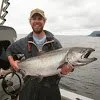
On Step Alaska: We don't have any now. It's closed until the 15th. It's a hatchery — the terminal run opens on the first, but it's a very, very limited area for the terminal run. Outside waters it opens sooner and you can get your fish there. It's all the fish going up the Unuk and those other rivers to Canada — they let them by first. I caught a 25-pound king in the Derby there in Ketchikan. I didn't even make the board when I was a kid.
Yeah, when I first moved back here — I grew up on Prince of Wales Island and moved back to Ketchikan in 2013 — it was the last couple of years of the King Salmon Derby. Because of the populations, they don't open the season until after the 15th. So they changed it to a Silver Salmon Derby in the late summer. It's weird to be living through that transition. The fishing on the outside of Prince of Wales, those outside waters are still pretty good, but the fish are smaller, there are fewer of them, and you have those emergency closures sometimes or changing regulations. So all of a sudden someone who's booked their ticket to come up can't keep a king salmon — it's pretty tough.
Bishop: Right. Well, Jeff, thank you.
On Step Alaska: Yep. Thank you. Appreciate it.
Thanks for listening. Please share. If you found today's conversation useful, you can go deeper with my writing on Substack — that's where I expand on these ideas from the show.