Episode 501 - Island life in crisis
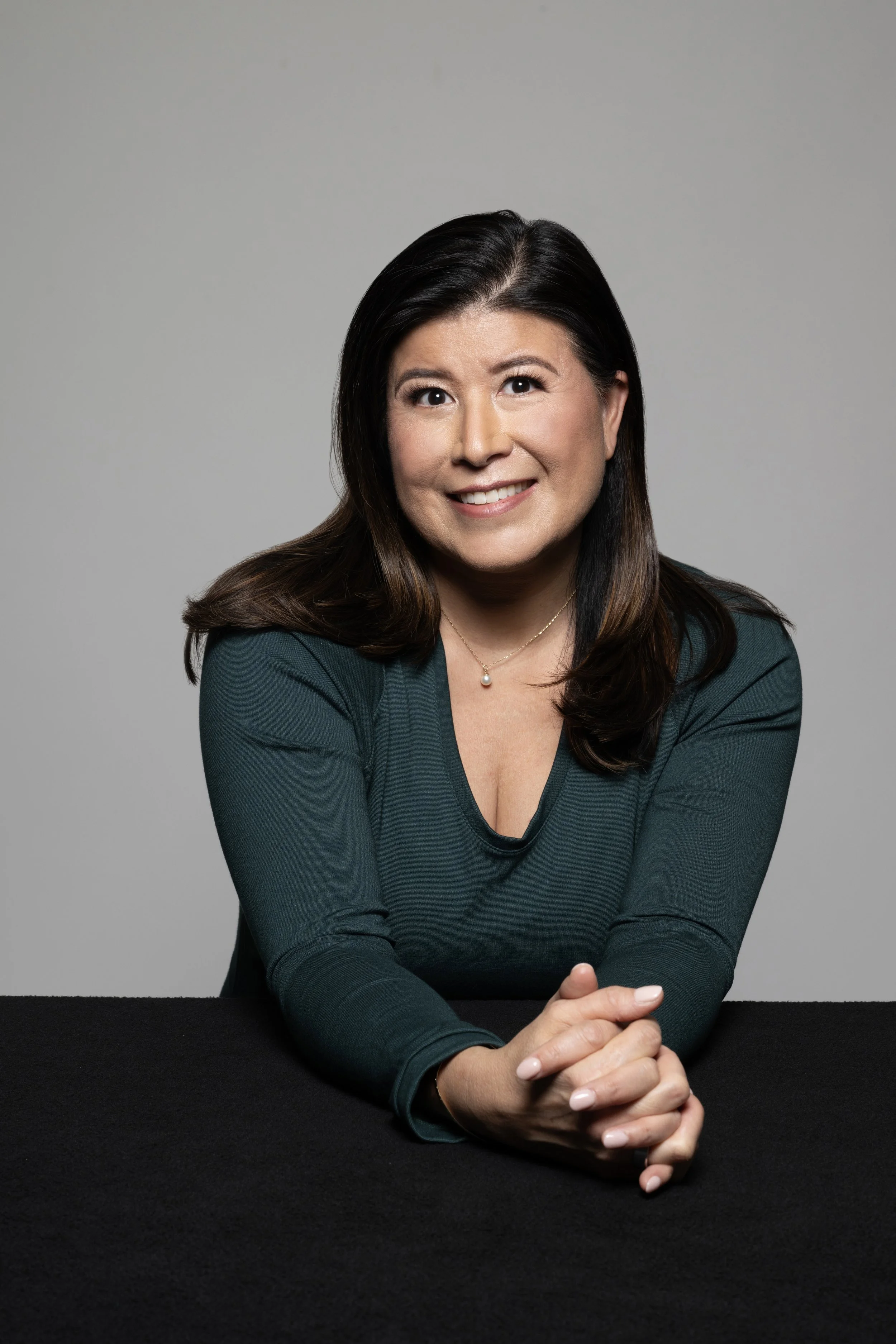
In this episode, journalist and author Sara Kehaulani Goo discusses her book Kuleana: A Story of Family, Land and Legacy in Old Hawaii. She summarizes the story of how a shocking tax increase on land granted to her family 175 years ago nearly cost them the property. The story is highly relatable as wealthy non-locals gobble up land which prices out many locals in tourist destinations like Hawaii and Southeast Alaska. We also talk about her journalism career across major outlets (now with the Washington Post) the rise of creator-driven media, potential uses and risks of AI for reporting, and practical advice for aspiring journalists.
Guest: Sara Goo, Author of Kuleana
Jeff: All right, Sara Goo, welcome to the podcast.
Sarah: Thanks for having me, Jeff.
Jeff: So you've been a reporter, you've held leadership positions at Axios, NPR, and Pew Research Group, and the Washington Post, and you're the author of Kuleana — is that, did I pronounce that correct?
Sarah: Yeah, good job.
Jeff: A story of family land and legacy in old Hawaii. So because it is high school graduation season, is this exactly what you had planned when you were graduating high school — to do all those things?
Sarah: Actually, I was one of those kids who knew exactly what I wanted to do when I grew up. Journalism was on my mind and like my singular focus. I was on the high school yearbook. And so I knew I wanted to do something in journalism for the rest of my life. So I was pretty nerdy about it. I don't know that I knew I was going to write a book, but definitely it was my passion — journalism for sure.
Jeff: Was it what you expected? Sometimes the high school version of something ends up being kind of different than what people expect, and so they shy away from it. But was it what you expected?
Sarah: Yeah, I mean, yes and no. I think the career of doing — you know, the mission of journalism — has definitely been what I thought it would be, which is the idea of just telling stories that would empower people with information to help them make decisions about their lives. I think that has, for the most part, been what I thought it would be and has paid off. What has — and this could be a whole other separate podcast — but I think the public perhaps doesn't value journalism, or maybe journalism hasn't done its job as well. The media business in general has just turned out to be pretty tumultuous and difficult. So I think getting through, breaking through to people to provide factual information has been really hard in the last several years in particular. And so that struggle has been really challenging and therefore less satisfying, I would say. So anyway, that's a whole separate podcast. But doing it when it's well done — that part of it I really enjoy.
Jeff: It's a mission worthwhile, of course. So speaking of mission, your book was a bit of a mission into some family history. You think it's really important — well, it is really important — to go back into the history and find a generation. You were able to find that land was given to an ancestor of yours 175 years ago. Pretty incredible. What did finding out those details mean to you, and how has it impacted how you've gone forward?
Sarah: Yeah. So I mean, I think I didn't set out to really write about myself or my family. I think that as somebody who's part Native Hawaiian and grew up with those roots, I really always wanted to write a story that just kind of told a truer story about Hawaii. I feel like its narrative, to me, always felt — at least from the American perspective — very too simple, too one-note, and, you know, false, to be honest. I think most Americans know Hawaii as this bucket list vacation spot, this beautiful place, which it is, or they know Pearl Harbor, and that's literally it. And to me, as someone who has a lot of family there, I really feel like there's a deeper, more beautiful, culturally rich story — the deeper history of the indigenous people of Hawaii and, you know, the story, frankly, of colonization of Hawaii. It's the only state that used to be an independent nation. I don't even think a lot of people have probed that or know that in this country, despite it being the most recent part of the United States — which is something kind of astonishing to me. And so I really wanted to tell just a richer, truer story, a different narrative about Hawaii that I felt deserved to be told. And so this story about my own family became just a vehicle to do that. I kind of turned my reporting to my own family to be able to flesh that out. And to be honest, it was kind of a surprise. I didn't really expect to do that. I really kind of set out early on to just tell a more rich, honest narrative, but family events kind of overtook the narrative, so to speak. And I realized that was maybe a better vehicle to do it. So that ended up being the case.
Jeff: It seemed highly relatable, even though it was specific to your family, because I think a lot of people — that story resonates with a lot of people, the different elements of that. You wrote that there's a difference between heritage and identity, which I really like. Can you explain a little bit further about the difference there?
Sarah: Yeah, I'd love to. I think Alaska and Hawaii probably do have a lot in common. And for me, the issue I explore — other than trying to hold on to our family's land — was really also the idea of my own identity and my own family's history as someone who lives now far away from Hawaii. I live in Washington, D.C. As you talked about, I'm in the news business. I'm raising my children far away from that place. And so I think it was really about, you know, there's a difference between what we're born into — what our family story is — and then also how we choose to continue on the story of our family and our own identity and pass that on. And I think that, as we in this country are increasingly meeting and pairing up and partnering with people from different cultures, it wasn't until I was raising my own children that I realized that it takes a lot of intention to explore what we really want to pass on into the next generation. And I think our culture is so focused on the me, the right now — the me, me, me culture. It's all about what do I want right now. And it's very, you know, that capitalist culture just so focuses on the self. And I think the Hawaiian culture, at least, and I think a lot of indigenous cultures really focus on that generational responsibility — what do we owe those who came before us and what do we owe those who come after us? And I think particularly when you have a culture that's so connected to the land and the environment around you, you can't help but have that sense of responsibility. And that's the name of my book — kuleana — which translates to responsibility. And it's really not even just responsibility in the American sense of the word, like the burden of things you have to do, but in a Hawaiian understanding of it, it's really about a generational responsibility. And I think that is a word that hopefully transcends culture.
Jeff: Living in Southeast Alaska on Prince of Wales Island, it was probably about 70 or so percent Native when my family moved up. So my brother and I were the only blonde kids in the school. But we just saw this rich culture — there was the native language in the schools, there was native art class. And it was really important, really informative, to see in education how they respected the elders and being stewards of the land. And so when I went to college in Arizona, I really identified as Southeast Alaskan. I'm not indigenous to that area, but when you are around people who cherish the land and have those important values, it's really reassuring. And so I found myself really missing Alaska when I wasn't there. Even when I graduated college and started teaching in California, I really longed for Alaska and I felt really at home and would go back during the summers. If you're untethered to a land, it's pretty tough.
Sarah: Yeah, and I think the word stewardship is a really important word to understand. I think my book is a lot about this journey of our family land that we inherited, which faced this property tax increase of 500% in one year. And so we're really forced to deal with this crisis. And so it's about the crisis of real estate and what to do about it. But really, it's about kuleana. And it's about this real responsibility that was handed down to us about stewardship. And that's a very, very different understanding of the care and honor, actually, of our connection to a place. And I think an island is a particularly unique thing — people of islands particularly understand that because your livelihood and your ability to exist is so dependent on it. And so that is something really special and I think is a totally different understanding of our relationship to land. And it's not even just land. It's water, it's streams and waterways and all the other places where life exists. And so I think that context in which we live is just so essential to understand and appreciate. And it's a very different way of going through the world.
Jeff: So that land that your family has — it's surrounded by land that's owned by very, very wealthy people. So was the tax increase just a way of getting more money from wealthy people from the mainland who have gobbled it up? What was the reasoning behind the severe tax increase?
Sarah: Yeah, I think a couple of reasons. I think Hawaii is a place where property values have gone up exponentially, perhaps faster than some other parts of the United States. And that's because, one, the island nature of it — there's a finite amount of real estate. And number two, it's highly desirable and the world's billionaires can buy it up. It's a place where a third of the property taxes are paid by people who don't live there. And so that leaves a lot less property for local people to live and creates incredible pressure there. And it also raises the value of all the rest of the property and then the tax levels for everybody. So what had happened after my grandparents passed is — without explanation for us — the taxes just shot up and we had to consider our options, like whether to reclassify the zoning of it, or whether to build on this property, maybe rent it out. None of those sounded really attractive to us, but we did know that one thing we wanted to do was hold on to it. But to be honest, the point really was that this is not a unique story for Native Hawaiian families. If you have met any Native Hawaiian family, every family has a story like this — of property they have lost for this reason, or forced to sell for similar reasons, either this generation or previous generations. And it's not just Native Hawaiians — it's local people who have had land in the family. And it's a crisis. There's a ripple effect that's happening today of displacement of local people, of indigenous people. There are now more Native Hawaiians who live outside of Hawaii. And there's a crisis writ large for the islands where there's a shortage of doctors, a shortage of teachers — they literally fly in teachers from the Philippines to teach in the schools.
Jeff: Yeah, we've had that too.
Sarah: Yeah. And so it's like, where is this going at some point? It's not sustainable. It's an untenable situation. And I don't live in Hawaii currently, but I think there's a lot of policy things they have to sort out there. There are some measures that they're considering around housing, affordability, cost of living, et cetera. But fundamentally, you have to have balance — or the Hawaiian word for it is pono — you have to have this sense of: who is this land for? It has to serve, at the end of the day, the people who live here. It has to serve local people. And if it doesn't, it doesn't work for anyone. It can't just be a place for visitors. So I think the issues that Hawaii is dealing with are familiar to a lot of other places in our country and around the world that are trying to find this balance and finding themselves completely out of whack. Because it's really a wealth inequality issue. It's really about a land and resources inequality issue. And it's about rethinking how we're dividing up, and what we value at the end of the day.
Jeff: Here in Ketchikan, we're going to have one point six million visitors this summer. And the town of Ketchikan has got about nine, ten thousand people. Tomorrow alone, we're going to have 16,000 people off cruise ships. And that's such a massive part of the economy. If we want what we have as far as infrastructure, if we want that — we don't have a state income tax because we want a sales tax — locally, we need it. It's tourism or nothing. But also what comes along with that is more people come up here, they see it, and they want a chunk of it for themselves. So they buy their summer home, and Airbnb was kind of non-existent about five years ago but it's all over the place now post-COVID. And you know, Southeast Alaska — there's a ton of land, we have Tongass National Forest and there's Native corporation land and village corporation land and state land — but you do feel that squeeze. And it is tough to reconcile going forward because you don't want to disincentivize people making products that we use, but also, is it undermining our experience, and then the locals suffer? I don't know how we deal with that. Have you come up with anything?
Sarah: Well, yeah — I think you can look at the mistakes Hawaii has made, well ahead of you. Which is becoming too dependent on it. You know, it's more than 80 to 90% of the economy. And when that becomes your crutch, then you don't have a whole lot of options. So I think diversification is key. And I think that Hawaii feels in particular like they can't stop the planes from coming. So you're beholden to that power, that money that comes along with it. And then those are the people who built your infrastructure, those are the people who pay the jobs, make the jobs, and make everything else happen. So that becomes a very formidable thing to reckon with in the long run. So anyway, I think there are probably other versions of that in Alaska's economy, from what little I know.
Jeff: So as you're researching this, it has to be kind of disheartening and depressing. How did you continue along the story without feeling overwhelmed with despair — with the taxes and with the inevitabilities? How do you manage to continue telling the story? And that's something that as a journalist, you know, those things happen.
Sarah: It wasn't all bad news. I mean, I think there is a lot of joy in — A, I did meet a ton of family members that I didn't know before. And I think there was a lot of joy in discovery. I'm a lover of history. I love genealogy. It took me down all kinds of really fun research paths. You know, to line up your own family's history to American history, to the history of big moments in time, and see yourself in it and see your family in it — where they stood in that moment and their part in it — is really exciting. And also to see your family story check out — I mean, my grandmother would take me to our family land and say, "Sarah, our land was given to us from the king, and it was once from the mountain to the sea." And I knew that my grandmother had 10 acres of this land, and as a young child I would say, I wonder if grandma's story is true. And then to find — after she died — the actual records, handwritten from King Kamehameha III, and find that actually the original grant was 990 acres, and to be able to tell the story of how did 990 acres become 10 acres — and that the story of our family was the story of the Hawaiian people — is powerful. And that's a story that deserves to be told. It's a sad story, but it's a true story. And it's an indigenous story and it's an American story. So we should tell that story. I'm a storyteller, and that's my job. And it was also gratifying to know the stories my grandmother told me, which I could then verify and hear the same stories from my great-uncles and great-aunts I never met until five years ago. And that was really lovely — to hear that their kupuna had told them the same stories they were passing down to me. And also to hear that they were really proud to support this book and share the story. And in the end, I think it brought a lot of generations together. Sometimes in a crisis you're forced to act and make hard choices. You often hear of an inheritance tearing families apart. In our case, it rallied us together. So I think there are some moments to celebrate at the end of this story.
Jeff: I think one of my favorite images was the artifacts that were wrapped in newspaper and put in the Costco box — and how at the time it was probably just something neat that should be saved, but now, since time has passed, those are like priceless things. So what was something that you love the most — your favorite part of the book?
Sarah: Good question. I think that was one of my favorite parts too. I think there are a lot of pieces of Hawaiian history that were what they call chicken-skin moments — just exciting moments to discover. Another moment: I knew that my great-grandmother's first language was Hawaiian, which is a language I never learned to speak. I grew up in Southern California. But I discovered — someone sent me — an audio recording of her. She had done an interview on the radio in the 1970s. And I popped it into my Mac computer. And hearing her voice speaking Hawaiian was like the most exciting, thrilling, goosebump moment for me. It was so beautiful. It was like listening to someone singing a lullaby to me. And I felt like I connected to this woman I'd never met. And I thought, wow, what a treasure to hear someone speak a language that almost died off the face of this earth, and some miracle has come back and is now being spoken and taught in immersion schools all over Hawaii. What an amazing feat that is. And I think that's very inspiring.
Jeff: What did family members say when you approached them about not only researching this, but also writing about it? Were they excited about it because of your journalistic credentials, or were they worried that the family laundry was going to be aired? What was that like?
Sarah: Well, no family's perfect, right? I think there was some trepidation about what I was going to write, just because I wasn't familiar to everybody and I had to really introduce myself and earn a lot of trust. But one upside of taking so long to write a book is that it allowed me to spend a lot of time to get to know everybody and really interview as many people as I could. And so, you know, this book was a real labor of love, like a lot of books are — and I know you're an author too. Over that time, I think it allowed me to tell everybody what I wanted to do and why I wanted to do it. And they came to understand that reasoning and got to know me and my intentions. And so by the time the book came out, it wasn't a surprise and everyone got to read it well ahead of time. And there was always family tension, but I really tried to focus the book on what does a reader need to know about the story and why. It's not a chronicling of every single thing that went down, but really what matters most to the story.
Jeff: What about the kids? You wrote about the hula experiences. And as I'm reading that, I have a toddler — she's almost two years old. And I'm so afraid of those moments where she's super cute right now, just impossibly cute, but once she gets to the point where I'm going to be an embarrassment — or I'm going to do something she's not going to want to do, or it's a potential connecting point — or like, what if she doesn't love fishing? What was it like writing about the kids, and have they read it? Have they shared the book?
Sarah: Yes, they have. I think my daughter, Chloe, in particular — I wrote something that wasn't totally flattering about her not fully embracing a moment when I made a lei for her and she didn't want to wear it. So it was kind of a heartbreaking moment for me as a parent. But I think she understood the story and why I shared it. And I also wrote another redeeming moment for her. But I think they understood that I needed to write an honest story, and that was part of the journey. And they're really proud. They came along to all the book tour visits with me. And more importantly, they saw how people — readers — connected to the story and how much it meant to them. And I think that mattered a lot. So they're super proud. They gave me all kinds of tips about how I could do better on my Instagram.
Jeff: Oh yeah, yeah.
Sarah: Which is just true. 100% true. But you know, they're teenagers. So yeah.
Jeff: Yeah, that's crazy. The COVID years and the smartphones — it's just making everything so much different. Are you concerned about going forward? How did you parent through all of that? Give me some tips. COVID?
Sarah: I was the worst. I was the worst parent because I was running a news organization and just throwing food out and hoping that they were eating, and giving them money and telling them to ride their bikes down the street and go to the local corner store and buy whatever chips and ice cream they could eat. That's literally how I parented. It was really, really terrible. But they grew very independent, which I think is somewhat maybe redeeming. I'm not sure. I was running a news organization and writing a book at the same time. I don't recommend that at all.
Jeff: Well, you're on the other side of it now. It's one of those things that — you know, it's super cheesy, but what doesn't kill you makes you stronger, something like that. And that was a time when it was really important to be a journalist and tell the stories. There were so many things going on in addition to COVID. And if we did not have journalists who were willing to write the truth in those times — and it was such a hard time to know what was true and what wasn't — what was mostly true, or this is what we know at this point, which could change in a week, and that is inherently journalism — but all the negativity was amplified so much. What a difficult time to be a journalist at that point.
Sarah: Yes. I mean, I think what's been the hardest thing has been protecting journalists — online, personal safety, as well as physical safety. Ten years ago, I used to worry about that for my journalists overseas, and now I worry about it all the time for journalists in this country. And that's a really sad state of affairs. I wish that we could just only have to worry about journalists doing their job, but unfortunately we're not in that environment anymore.
Jeff: I was at the student paper in college and I loved just the heat that was put off by the environment. It was just fun to be around different people with different ideas. I never got that full experience — I do some freelance writing but I'm never going into a newsroom. And I definitely miss that. And it sounds like the sun has kind of set on that with everything that's going on, and then of course newspapers having to go online, shift, change, reevaluate.
Sarah: Well, it still exists for sure. I think there's a lot more remote work, but there's a lot of still creative collaboration. There's still a lot of snarkiness and that newsroom sensibility. It's still very much alive and well. A lot of gallows humor keeps us going, for sure. And there's still a lot of collaboration. Day-to-day working together just looks differently than it used to, and jobs have changed, the way that people work. But the culture is very similar. What's this creator economy venture you have with the Washington Post?
Jeff: Yeah, good — thanks for asking.
Sarah: So I've been really interested in the changes that are happening to media. A lot more journalists are going independent. A lot of us are getting our information from independent creators. And to me, it's kind of like going more directly to the source — to independent experts who are able to just publish on all kinds of platforms, whether that's Substack or Instagram or YouTube. And so what I'm building is a network of independent creators who are really about subject matter expertise. Not necessarily beauty influencers, but really like experts in areas like personal finance, doctors, health and wellness, and things like that. I'm not focused on hard news creators because we have that in the newsroom, but building this network to help them grow their audience, to help them build an ad network that we can tap and help support them — because we have an ad network through the Washington Post. And so the idea is to tap into their audience that we don't have at the Washington Post, through social media, do the vetting and the fact checking for them and partner with them to create content. It's really about being smart about leveraging the audience and reach that they have, and being realistic about where people are getting their information and helping to make sure they're getting high quality information, whether that's from a creator, a subject matter expert, or from our journalists. So yeah, it's really fun. It's very entrepreneurial. Very different. And we're just getting started. We launched a couple of shows with different creators and we're launching a new social video series with a different creator every month.
Jeff: Nice. And it seems like things got Wild West for a little bit. Do you think things are going to shift back to more of a trusted news organization, rather than a random person reporting whatever they think? You think it's going to be a beneficial correction?
Sarah: I wouldn't even call it influencer journalism. It's influencer stuff. And you know — I think it's still the Wild West. I mean, anybody can publish, anybody can start a podcast, anybody can start a Substack. I think the question is, what we're trying to do is create a bit of a signal that these folks are part of a network that is fact-checked, that is verified, and there's some kind of verification system that you can trust — a badge that you can see that these are different from the rest. Because right now, that doesn't really exist. As a consumer, you have to spend a lot of time figuring out: who is this person and can I trust them? And that's exhausting, frankly. Without that, you just have to go on, hmm, what do I think? But until then, I think people are going to just self-select — they're going to have to choose, do I like this journalist, do I like this historian, do I want to subscribe, do I want to pay? And that's very overwhelming. People have curated their own media diet. Some of that's going to be traditional media, some of that's going to be individuals. And I think that's going to continue. But I do think at some point a network of trusted creators plus traditional media makes a whole lot more sense and would help both advertisers and consumers sort through it much easier. That's my value proposition, at least.
Jeff: As a journalism teacher, I'm a little bit worried about usages of AI. Do you think AI is going to be an effective tool, or is it going to erode journalism further? Where are you at with AI?
Sarah: Yeah. Well, AI right now is doing one thing, which is quickly eating into the bottom line of a lot of traditional media, because it's killing search and referral links directly to news organizations as sources of information. It's creating these AI summaries, right? So you ask a question, you want to find information about what's happening, and instead of telling you to link to the Washington Post or the New York Times, it's just answering with an AI summary that may or may not be true. And so that is immediately leading to a lot fewer people going directly to a source or a news source in particular. So that is for now the big problem, and there's no real replacement for that lost traffic. And so that affects the business model that has really driven a lot of traffic to news. AI is also replacing some of the content. And so I think newsrooms are trying to figure out, how do we use AI to produce content more quickly that is accurate? Is that even possible? Maybe on the production side — organizing material in a way that can be fact-checked. But journalists are very wary of that, of course, for good reason. And so I think there's a lot of nervousness around that and a desire to make sure it's done responsibly. So there's constant experimentation going on, but with a lot of concern about making sure it's responsible.
Jeff: Yeah, it's hard to tell what the future is going to look like because you have people who are hyping AI in order to make money, and then people saying they're overhyping it. So what is it? Is it going to take over? Is it going to be an apocalypse or not? It's so hard to tell what's going on here. I try to tell my students to be resourceful and not use it to erode your skills — you have to develop the skills first. But also, if the future is going to be that we have to incorporate AI, then what's my duty to instruct them on appropriate use without just giving them the shortcut? It's a really confusing time to be a teacher.
Sarah: I mean, of course, there are other uses for reporting that are incredibly helpful using AI. You can do data analysis so much faster for investigative reporting, and we've been able to review documents much much faster. So of course there are incredible uses for it — any large task of document search and document review can be very helpful. So I think there are two sides of this coin that we're all trying to understand at the same time. And "do no evil" still applies here when we talk about technology. But it is evolving so fast, it just feels very overwhelming. And I think it just adds to all the other changes that are happening to media all at the same time — particularly in Washington, when every day is a new crazy day.
Jeff: You have primarily a leadership role. Are you still doing a lot of writing?
Sarah: Frankly, I'm not doing a ton of writing. When I do write, it's really focused on my book — my paperback comes out next month, actually in a few weeks. So the paperback version of Kuleana comes out and I still want to write and I'm engaged in topics related to kuleana. And I am thinking about some ideas for a future book following this. But I'm also kind of interested in political issues — some of the themes related to the book, just because I think they're really important. And I've written some things around the creator economy and the media business. So those are my two big lanes.
Jeff: It has been fun to kind of watch how your career has evolved and developed. Is there a part of you that wants to go back to those first days of just finding the story, newshound stuff — not being an administrator, not being at the top of the food chain?
Sarah: Well, you know, I didn't set out to be a boss. But what drives my interest here is I really want to see journalism thrive and survive. And that requires figuring out a new business model for it. And frankly, I didn't see the business side figuring that out quite well at different companies I worked for. I think my last job at Axios was really exciting — to be at a startup where you could just build something from scratch that was completely new was really fun and innovative. And this is a business that every five years gets totally disrupted. So we need the fourth estate in this country. We need to hold powerful people to account. And we need underpinning that a business model that is going to ensure that journalists have jobs. And right now, what I've seen in the last 25 years of my career is that every year, fewer journalists have jobs. So that is a problem I'm committed to solving. That requires me to lead in some capacity to make sure I can at least do what I can. I do love telling stories, and so I feel like the book and other projects allow me to do that. But I'm increasingly more interested in tackling the business side to solve that.
Jeff: What would you say to someone who's thinking about getting into journalism? If you're going to talk to my high school seniors who are about ready to graduate and contemplating a career in journalism, what skills would you recommend they have or develop? And what path or avenue would you recommend?
Sarah: Good question. I'm always so glad to hear that there are still students who want to be journalists and there's still a passion for that. I would recommend a couple of things. One is, pursue all possible avenues and experiences and skills you can build to tell stories in all possible ways. I started my career saying I'm going to be a writer and a newspaper reporter — that's it, I didn't want to do TV, I didn't want to do anything else. But that's just not possible. I think you have to be able to tell a story, write a story. Writing is the fundamentals. So you have to have strong writing, but you also have to be able to do an Instagram story. You have to be able to do a TV hit. You have to be able to think about sound. You have to be able to do an interview really well. You have to study people and the best people in each of these formats and how they do it. And that's kind of how I learned — really watching the best of the best and breaking it down and asking, why was that interview so effective? Why was that story done so well? What makes this graphic so good? Why was that video only 60 seconds but so viral? What made it that way? None of those things are just luck — they're crafts. And the best journalists are students who are constantly learning. So that's my best advice — study the people who are the best. Because you always have something to learn. And also be on your toes. This business is constantly changing. So always see if you can anticipate what's coming next.
Jeff: Before we close up here, any other thoughts about journalism? And then I'll ask you any closing thoughts about the book.
Sarah: Journalism is not for the faint of heart. Do not get into this business if you aspire to be rich, or if you're sensitive to people saying bad things about you. You have to be really tough in this business, both in terms of being brave and being bold with the kinds of stories you want to tell, and being resilient in going through a business that isn't always kind financially. So that's not for all of us. And I think even if you don't do it forever, know that it's still worthwhile if you're up for that. It is incredibly satisfying. And it'll probably be the most satisfying thing you do.
Jeff: What about a word about the book?
Sarah: I would say the book is the most satisfying thing I've ever written, the most satisfying story I've ever written. Just because I've written, I don't know, hundreds of stories. And with every story I'm hoping the reader or the viewer finds value in it. And this one — some stories are more important than others, right? And so I'm hoping that this is one book on the shelf that changes a narrative.
Jeff: Where can people find it? Where can people buy it? Do you have your own Instagram — are you developing your Instagram skills? Do you have a social media presence?
Sarah: I am, but I'm not good at it. Yes, you can find me at sarahgoo.author on Instagram. But the book — you can find it on Amazon, you can find it on Bookshop for local independent bookstores, you can find it on Libby with your local library. You can find the audiobook — I recorded it myself. If you want to listen to my voice for seven hours, I know a lot of people like to consume books that way. That's also on Amazon, or Audio FM is another place you can do the audiobook. And anywhere — bookstores, Barnes and Noble, Target, anywhere — you can buy the book online. Hope you enjoy it, and I'd love to hear what you think.
Jeff: It was great. I really enjoyed it. I did listen to it because it takes a little bit for Amazon to get books up here. When you were reading it, were you kind of editing in your head too? Like, reading a line — ah, man, I shouldn't have written that. How long did that take to actually record?
Sarah: Oh my gosh. It took like a week. It's a fascinating process — I had a producer in my ear, and it's kind of like acting. That's the part I didn't anticipate, and I'm not very good at that. And so she would say, "Sarah, read that again, but with more feeling." And I would be like, oh my God, okay. So you have to read dialogue and be different people in your book. And so that was more challenging, I would say. But it was also fun. But I'm not a voice actor, clearly.
Jeff: So that's a great thing about audiobooks — listening to books, if they're read well, it just creates such a richer experience. Some books you can't be doing chores while you're listening to them, especially fiction. I haven't done a lot of audiobooks, but I have a short commute — if I'm going on hikes or doing yard work in the morning, I like to listen to books or podcasts. Because it's just mundane work. You don't have to be thinking about anything. So you can just really focus on your sense of hearing. And the way it's read is really fantastic. I don't know if I can really say that I read it, but I did consume it. And it's a cool tool. I really like it.
Sarah: Cool! Yeah, I've had people say they would fall asleep listening to me and I was like, oh — that's a compliment, but yeah. I appreciate the sentiment but I'm not sure — I won't ask anything else. But no, well, thank you for your interest. I hope that folks listening find this conversation interesting and relatable for Alaska. I'm a fan of Alaska.
Jeff: Oh, that's awesome.
Sarah: I've only been there once, but I know it's so beautiful and the life is so unique and I love the people.
Jeff: Were you up here for a story or for a cruise?
Sarah: Actually, I was there with NPR when I worked there. So I visited a local station in Juneau and Anchorage. It was really cool.
Jeff: Yeah. Coming into Juneau, it's unlike anywhere else — there's the glacier right there. It's just right there. Yeah, it's awesome.
Sarah: Yeah, it's awesome.
Jeff: Well, thanks for taking some time and staying up late on the east coast. Anytime — take care.
Sarah: Thanks!